
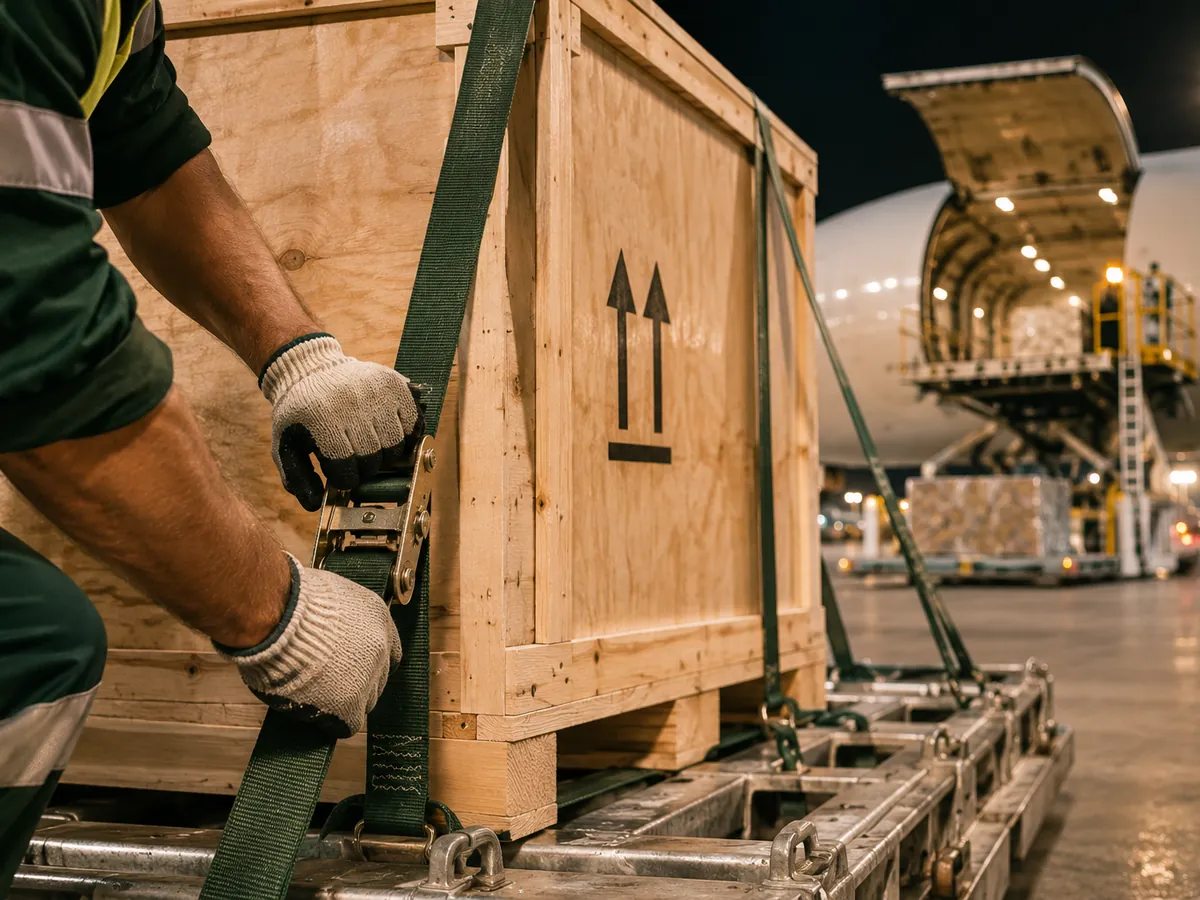
AOG stands for aircraft on ground: an aircraft that cannot fly until a part is replaced. Every hour it stays on the ground costs the operator money in lost flights, crew, passenger compensation and parking. AOG logistics is about removing every minute of delay between the part and the aircraft.
What happens after the call
- Details first. Part number, dimensions, weight, whether it is classed as dangerous goods (some components are, such as batteries and oxygen generators), and the exact delivery point at the destination airport.
- Routing. We look for the first available flight, not the cheapest. Sometimes a connection through a hub arrives sooner than a later direct flight.
- Collection. The part is collected from the supplier or the operator's store and brought to the airport, with the paperwork prepared while it is on the road.
- Tendering. The shipment is handed to the airline with priority handling, and the waybill details go to the receiving side before the aircraft lands.
- Delivery. At destination, the part is cleared and delivered to the engineers at the aircraft, often within hours of arrival.
Paperwork that saves time
Most AOG delays are not in the air but on the ground: a missing certificate, an unclear value for customs, an address that does not match. Keep these ready for every critical spare:
- The part's release certificate and a clear commercial or pro-forma invoice.
- Correct weight and dimensions, including the packaging. Large items such as engines need the stand dimensions too.
- A named contact at the receiving end who can sign for the part at any hour.
Plan before you need it
The fastest AOG moves happen where the operator and the forwarder have already agreed how they will work: who to call, how quotes are approved out of hours and where parts are delivered. If you operate aircraft into Africa or the Gulf, talk to us before the next grounding, not during it.